Low-level projector interface parallelproj.backend
backend functions that interface the parallelproj C/CUDA libraries
- parallelproj.backend.calc_chunks(nLORs: int, num_chunks: int) list[int][source]
calculate indices to split an array of length nLORs into num_chunks chunks
example: splitting an array of length 10 into 3 chunks returns [0,4,7,10]
- parallelproj.backend.count_event_multiplicity(events: Array) Array[source]
Count the multiplicity of events in an LM file
- Parameters:
events (Array) – 2D (integer) array of LM events of shape (num_events, num_attributes) where the second axis encodes the event attributes (e.g. detectors numbers and TOF bins)
- Returns:
1D array containing the multiplicity of each event
- Return type:
Array
- parallelproj.backend.empty_cuda_cache(xp: ModuleType) None[source]
Empty the CUDA cache
- Parameters:
xp (ModuleType) – array module type supporting CUDA arrays (cupy or torch)
- Return type:
None
- parallelproj.backend.is_cuda_array(x: Array) bool[source]
test whether an array is a cuda array
- Parameters:
x (Array) – array to be tested
- Return type:
- parallelproj.backend.joseph3d_back(xstart: Array, xend: Array, img_shape: tuple[int, int, int], img_origin: Array, voxsize: Array, img_fwd: Array, threadsperblock: int = 32, num_chunks: int = 1) Array[source]
Non-TOF Joseph 3D back projector
- Parameters:
xstart (Array) – start world coordinates of the LORs, shape (nLORs, 3)
xend (Array) – end world coordinates of the LORs, shape (nLORs, 3)
img_shape (tuple[int, int, int]) – the shape of the back projected image
img_origin (Array) – containing the world coordinates of the image origin (voxel [0,0,0])
voxsize (Array) – array containing the voxel size
img_fwd (Array) – array of length nLORs containing the values to be back projected
threadsperblock (int, optional) – by default 32
num_chunks (int, optional) – break down the back projection in hybrid mode into chunks to save memory on the GPU, by default 1
- Return type:
Array
- parallelproj.backend.joseph3d_back_tof_lm(xstart: Array, xend: Array, img_shape: tuple[int, int, int], img_origin: Array, voxsize: Array, img_fwd: Array, tofbin_width: float, sigma_tof: Array, tofcenter_offset: Array, nsigmas: float, tofbin: Array, threadsperblock: int = 32, num_chunks: int = 1) Array[source]
TOF Joseph 3D listmode back projector
- Parameters:
xstart (Array) – start world coordinates of the event LORs, shape (nLORs, 3)
xend (Array) – end world coordinates of the event LORs, shape (nLORs, 3)
img_shape (tuple[int, int, int]) – the shape of the back projected image
img_origin (Array) – containing the world coordinates of the image origin (voxel [0,0,0])
voxsize (Array) – array containing the voxel size
img_fwd (Array) – array of size num_events containing the values to be back projected
tofbin_width (float) – width of the TOF bin in spatial units (same units as xstart)
sigma_tof (Array) – sigma of Gaussian TOF kernel in spatial units (same units as xstart) can be an array of length 1 -> same sigma for all LORs or an array of length num_events -> event dependent sigma
tofcenter_offset (Array) – center offset of the central TOF bin in spatial units (same units as xstart) can be an array of length 1 -> same offset for all LORs or an array of length num_events -> event dependent offset
nsigmas (float) – number of sigmas to consider when Gaussian kernel is evaluated (truncated)
tofbin (Array) – signed integer array with the tofbin of the events the center of TOF bin 0 is assumed to be at the center of the LOR (shifted by the tofcenter_offset)
threadsperblock (int, optional) – by default 32
num_chunks (int, optional) – break down the projection in hybrid mode into chunks to save memory on the GPU, by default 1
- Return type:
Array
- parallelproj.backend.joseph3d_back_tof_sino(xstart: Array, xend: Array, img_shape: tuple[int, int, int], img_origin: Array, voxsize: Array, img_fwd: Array, tofbin_width: float, sigma_tof: Array, tofcenter_offset: Array, nsigmas: float, ntofbins: int, threadsperblock: int = 32, num_chunks: int = 1) Array[source]
TOF Joseph 3D sinogram back projector
- Parameters:
xstart (Array) – start world coordinates of the LORs, shape (nLORs, 3)
xend (Array) – end world coordinates of the LORs, shape (nLORs, 3)
img_shape (tuple[int, int, int]) – the shape of the back projected image
img_origin (Array) – containing the world coordinates of the image origin (voxel [0,0,0])
voxsize (Array) – array containing the voxel size
img_fwd (Array) – array of size nLOR*ntofbins containing the values to be back projected
tofbin_width (float) – width of the TOF bin in spatial units (same units as xstart)
sigma_tof (Array) – sigma of Gaussian TOF kernel in spatial units (same units as xstart) can be an array of length 1 -> same sigma for all LORs or an array of length nLORs -> LOR dependent sigma
tofcenter_offset (Array) – center offset of the central TOF bin in spatial units (same units as xstart) can be an array of length 1 -> same offset for all LORs or an array of length nLORs -> LOR dependent offset
nsigmas (float) – number of sigmas to consider when Gaussian kernel is evaluated (truncated)
ntofbins (int) – total number of TOF bins
threadsperblock (int, optional) – by default 32
num_chunks (int, optional) – break down the projection in hybrid mode into chunks to save memory on the GPU, by default 1
- Return type:
Array
- parallelproj.backend.joseph3d_fwd(xstart: Array, xend: Array, img: Array, img_origin: Array, voxsize: Array, threadsperblock: int = 32, num_chunks: int = 1) Array[source]
Non-TOF Joseph 3D forward projector
- Parameters:
xstart (Array) – start world coordinates of the LORs, shape (nLORs, 3)
xend (Array) – end world coordinates of the LORs, shape (nLORs, 3)
img (Array) – containing the 3D image to be projected
img_origin (Array) – containing the world coordinates of the image origin (voxel [0,0,0])
voxsize (Array) – array containing the voxel size
threadsperblock (int, optional) – by default 32
num_chunks (int, optional) – break down the projection in hybrid mode into chunks to save memory on the GPU, by default 1
- Return type:
Array
- parallelproj.backend.joseph3d_fwd_tof_lm(xstart: Array, xend: Array, img: Array, img_origin: Array, voxsize: Array, tofbin_width: float, sigma_tof: Array, tofcenter_offset: Array, nsigmas: float, tofbin: Array, threadsperblock: int = 32, num_chunks: int = 1) Array[source]
TOF Joseph 3D listmode forward projector
- Parameters:
xstart (Array) – start world coordinates of the event LORs, shape (num_events, 3)
xend (Array) – end world coordinates of the event LORs, shape (num_events, 3)
img (Array) – containing the 3D image to be projected
img_origin (Array) – containing the world coordinates of the image origin (voxel [0,0,0])
voxsize (Array) – array containing the voxel size
tofbin_width (float) – width of the TOF bin in spatial units (same units as xstart)
sigma_tof (Array) – sigma of Gaussian TOF kernel in spatial units (same units as xstart) can be an array of length 1 -> same sigma for all LORs or an array of length nLORs -> LOR dependent sigma
tofcenter_offset (Array) – center offset of the central TOF bin in spatial units (same units as xstart) can be an array of length 1 -> same offset for all events or an array of length num_events -> event dependent offset
nsigmas (float) – number of sigmas to consider when Gaussian kernel is evaluated (truncated)
tofbin (Array) – signed integer array with the tofbin of the events the center of TOF bin 0 is assumed to be at the center of the LOR (shifted by the tofcenter_offset)
threadsperblock (int, optional) – by default 32
num_chunks (int, optional) – break down the projection in hybrid mode into chunks to save memory on the GPU, by default 1
- Return type:
Array
- parallelproj.backend.joseph3d_fwd_tof_sino(xstart: Array, xend: Array, img: Array, img_origin: Array, voxsize: Array, tofbin_width: float, sigma_tof: Array, tofcenter_offset: Array, nsigmas: float, ntofbins: int, threadsperblock: int = 32, num_chunks: int = 1) Array[source]
TOF Joseph 3D sinogram forward projector
- Parameters:
xstart (Array) – start world coordinates of the LORs, shape (nLORs, 3)
xend (Array) – end world coordinates of the LORs, shape (nLORs, 3)
img (Array) – containing the 3D image to be projected
img_origin (Array) – containing the world coordinates of the image origin (voxel [0,0,0])
voxsize (Array) – array containing the voxel size
tofbin_width (float) – width of the TOF bin in spatial units (same units as xstart)
sigma_tof (Array) – sigma of Gaussian TOF kernel in spatial units (same units as xstart) can be an array of length 1 -> same sigma for all LORs or an array of length nLORs -> LOR dependent sigma
tofcenter_offset (Array) – center offset of the central TOF bin in spatial units (same units as xstart) can be an array of length 1 -> same offset for all LORs or an array of length nLORs -> LOR dependent offset
nsigmas (float) – number of sigmas to consider when Gaussian kernel is evaluated (truncated)
ntofbins (int) – total number of TOF bins
threadsperblock (int, optional) – by default 32
num_chunks (int, optional) – break down the projection in hybrid mode into chunks to save memory on the GPU, by default 1
- Return type:
Array
PET scanner geometries parallelproj.pet_scanners
description of PET scanner geometries (detector coordinates)
- class parallelproj.pet_scanners.BlockPETScannerModule(xp: ModuleType, dev: str, shape: tuple[int, int, int], spacing: tuple[float, float, float], affine_transformation_matrix: Array | None = None)[source]
Bases:
PETScannerModuleBlock (rectangular cuboid) PET scanner module
- Parameters:
xp (ModuleType) – array module to use for storing the LOR endpoints
dev (str) – device to use for storing the LOR endpoints
shape (tuple[int, int, int]) – shape of the regular grid of LOR endpoints forming the block module
spacing (tuple[float, float, float]) – spacing between the LOR endpoints in each direction
affine_transformation_matrix (Array | None, optional) – 4x4 affine transformation matrix applied to the LOR endpoint coordinates, default None if None, the 4x4 identity matrix is used
- property affine_transformation_matrix: Array
4x4 affine transformation matrix
- Return type:
Array
- get_lor_endpoints(inds: Array | None = None) Array
mapping from LOR endpoint indices within module to an array of “transformed” world coordinates
- Parameters:
inds (Array | None, optional) – an non-negative integer array of indices, default None if None means all possible indices [0, … , num_lor_endpoints - 1]
- Returns:
a 3 x len(inds) float array with the world coordinates of the LOR endpoints including an affine transformation
- Return type:
Array
- get_raw_lor_endpoints(inds: Array | None = None) Array[source]
mapping from LOR endpoint indices within module to an array of “raw” world coordinates
- Parameters:
inds (Array | None, optional) – an non-negative integer array of indices, default None if None means all possible indices [0, … , num_lor_endpoints - 1]
- Returns:
a 3 x len(inds) float array with the world coordinates of the LOR endpoints
- Return type:
Array
- property lor_endpoint_numbers: Array
array enumerating all the LOR endpoints in the module
- Return type:
Array
- property lor_endpoints: Array
LOR endpoints of the block module
- Return type:
Array
- show_lor_endpoints(ax: Axes, annotation_fontsize: float = 0, annotation_prefix: str = '', annotation_offset: int = 0, transformed: bool = True, **kwargs) None
show the LOR coordinates in a 3D scatter plot
- Parameters:
ax (plt.Axes) – 3D matplotlib axes
annotation_fontsize (float, optional) – fontsize of LOR endpoint number annotation, by default 0
annotation_prefix (str, optional) – prefix for annotation, by default ‘’
annotation_offset (int, optional) – number to add to crystal number, by default 0
transformed (bool, optional) – use transformed instead of raw coordinates, by default True
- Return type:
None
- property xp: ModuleType
array module to use for storing the LOR endpoints
- class parallelproj.pet_scanners.DemoPETScannerGeometry(xp: ModuleType, dev: str, radius: float = 380.56, num_sides: int = 34, num_lor_endpoints_per_side: int = 16, lor_spacing: float = 4.03125, num_rings: int = 36, symmetry_axis: int = 2)[source]
Bases:
RegularPolygonPETScannerGeometryDemo PET scanner geometry consisting of a 34-ogon with 16 LOR endpoints per side and 36 rings
- Parameters:
xp (ModuleType) – array module
dev (str) – the device to use
radius (float, optional) – radius of the regular polygon, by default 0.5*(744.1 + 2 * 8.51)
num_sides (int, optional) – number of sides of the polygon, by default 34
num_lor_endpoints_per_side (int, optional) – number of LOR endpoints per side, by default 16
lor_spacing (float, optional) – spacing between the LOR endpoints, by default 4.03125
num_rings (int, optional) – number of rings, by default 36
symmetry_axis (int, optional) – symmetry (axial) axis of the scanner, by default 2
- property all_lor_endpoints: Array
the world coordinates of all LOR endpoints
- property all_lor_endpoints_index_in_ring: Array
the index within the ring (regular polygon) of all LOR endpoints
- property all_lor_endpoints_index_offset: Array
the offset in the linear (flattend) index for all LOR endpoints
- property all_lor_endpoints_module_number: Array
the module number of all LOR endpoints
- property all_lor_endpoints_ring_number: Array
the ring (regular polygon) number of all LOR endpoints
- get_lor_endpoints(module: Array, index_in_module: Array) Array
get the coordinates for LOR endpoints defined by module and index in module
- Parameters:
module (Array) – the module number of the LOR endpoints
index_in_module (Array) – the index in module number of the LOR endpoints
- Returns:
the 3 world coordinates of the LOR endpoints
- Return type:
Array
- linear_lor_endpoint_index(module: Array, index_in_module: Array) Array
transform the module + index_in_modules indices into a flattened / linear LOR endpoint index
- Parameters:
module (Array) – containing module numbers
index_in_module (Array) – containing index in modules
- Returns:
the flattened LOR endpoint index
- Return type:
Array
- property lor_spacing: float
the spacing between the LOR endpoints in every side (face) of each polygon
- property modules: tuple[PETScannerModule]
tuple of modules defining the scanner
- property num_lor_endpoints_per_module: Array
numpy array showing how many LOR endpoints are in every module
- property ring_positions: Array
the ring (regular polygon) positions
- setup_all_lor_endpoints() None
calculate the position of all lor endpoints by iterating over the modules and calculating the transformed coordinates of all module endpoints
- Return type:
None
- show_lor_endpoints(ax: Axes, show_linear_index: bool = True, **kwargs) None
show all LOR endpoints in a 3D plot
- Parameters:
ax (plt.Axes) – a 3D matplotlib axes
show_linear_index (bool, optional) – annotate the LOR endpoints with the linear LOR endpoint index
**kwargs (keyword arguments) – passed to show_lor_endpoints() of the scanner module
- Return type:
None
- property xp: ModuleType
array module to use for storing the LOR endpoints
- class parallelproj.pet_scanners.ModularizedPETScannerGeometry(modules: tuple[PETScannerModule])[source]
Bases:
objectdescription of a PET scanner geometry consisting of LOR endpoint modules
- Parameters:
modules (tuple[PETScannerModule]) – a tuple of scanner modules
- property all_lor_endpoints: Array
the world coordinates of all LOR endpoints
- property all_lor_endpoints_index_offset: Array
the offset in the linear (flattend) index for all LOR endpoints
- property all_lor_endpoints_module_number: Array
the module number of all LOR endpoints
- get_lor_endpoints(module: Array, index_in_module: Array) Array[source]
get the coordinates for LOR endpoints defined by module and index in module
- Parameters:
module (Array) – the module number of the LOR endpoints
index_in_module (Array) – the index in module number of the LOR endpoints
- Returns:
the 3 world coordinates of the LOR endpoints
- Return type:
Array
- linear_lor_endpoint_index(module: Array, index_in_module: Array) Array[source]
transform the module + index_in_modules indices into a flattened / linear LOR endpoint index
- Parameters:
module (Array) – containing module numbers
index_in_module (Array) – containing index in modules
- Returns:
the flattened LOR endpoint index
- Return type:
Array
- property modules: tuple[PETScannerModule]
tuple of modules defining the scanner
- property num_lor_endpoints_per_module: Array
numpy array showing how many LOR endpoints are in every module
- setup_all_lor_endpoints() None[source]
calculate the position of all lor endpoints by iterating over the modules and calculating the transformed coordinates of all module endpoints
- Return type:
None
- show_lor_endpoints(ax: Axes, show_linear_index: bool = True, **kwargs) None[source]
show all LOR endpoints in a 3D plot
- Parameters:
ax (plt.Axes) – a 3D matplotlib axes
show_linear_index (bool, optional) – annotate the LOR endpoints with the linear LOR endpoint index
**kwargs (keyword arguments) – passed to show_lor_endpoints() of the scanner module
- Return type:
None
- property xp: ModuleType
array module to use for storing the LOR endpoints
- class parallelproj.pet_scanners.PETScannerModule(xp: ModuleType, dev: str, num_lor_endpoints: int, affine_transformation_matrix: Array | None = None)[source]
Bases:
ABCabstract base class for PET scanner module
- Parameters:
xp (ModuleType) – array module to use for storing the LOR endpoints
dev (str) – device to use for storing the LOR endpoints
num_lor_endpoints (int) – number of LOR endpoints in the module
affine_transformation_matrix (Array | None, optional) – 4x4 affine transformation matrix applied to the LOR endpoint coordinates, default None if None, the 4x4 identity matrix is used
- property affine_transformation_matrix: Array
4x4 affine transformation matrix
- Return type:
Array
- get_lor_endpoints(inds: Array | None = None) Array[source]
mapping from LOR endpoint indices within module to an array of “transformed” world coordinates
- Parameters:
inds (Array | None, optional) – an non-negative integer array of indices, default None if None means all possible indices [0, … , num_lor_endpoints - 1]
- Returns:
a 3 x len(inds) float array with the world coordinates of the LOR endpoints including an affine transformation
- Return type:
Array
- abstract get_raw_lor_endpoints(inds: Array | None = None) Array[source]
mapping from LOR endpoint indices within module to an array of “raw” world coordinates
- Parameters:
inds (Array | None, optional) – an non-negative integer array of indices, default None if None means all possible indices [0, … , num_lor_endpoints - 1]
- Returns:
a 3 x len(inds) float array with the world coordinates of the LOR endpoints
- Return type:
Array
- property lor_endpoint_numbers: Array
array enumerating all the LOR endpoints in the module
- Return type:
Array
- show_lor_endpoints(ax: Axes, annotation_fontsize: float = 0, annotation_prefix: str = '', annotation_offset: int = 0, transformed: bool = True, **kwargs) None[source]
show the LOR coordinates in a 3D scatter plot
- Parameters:
ax (plt.Axes) – 3D matplotlib axes
annotation_fontsize (float, optional) – fontsize of LOR endpoint number annotation, by default 0
annotation_prefix (str, optional) – prefix for annotation, by default ‘’
annotation_offset (int, optional) – number to add to crystal number, by default 0
transformed (bool, optional) – use transformed instead of raw coordinates, by default True
- Return type:
None
- property xp: ModuleType
array module to use for storing the LOR endpoints
- class parallelproj.pet_scanners.RegularPolygonPETScannerGeometry(xp: ModuleType, dev: str, radius: float, num_sides: int, num_lor_endpoints_per_side: int, lor_spacing: float, ring_positions: Array, symmetry_axis: int, phis: None | Array = None)[source]
Bases:
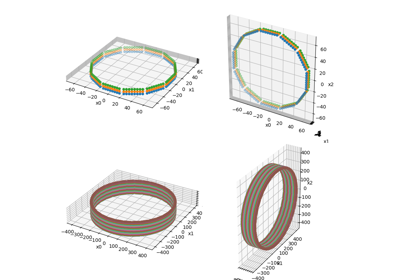
ModularizedPETScannerGeometrydescription of a PET scanner geometry consisting stacked regular polygons
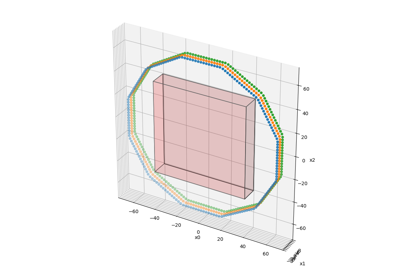
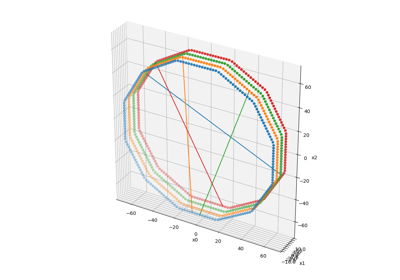
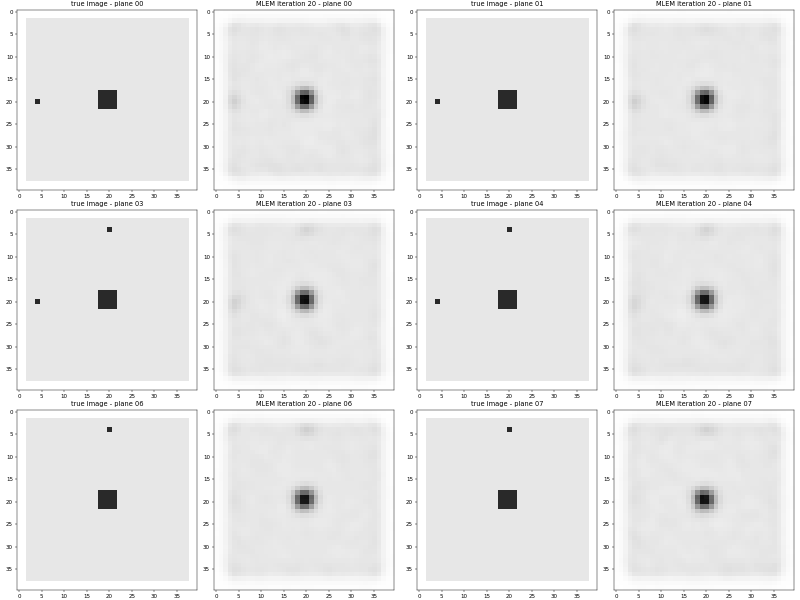
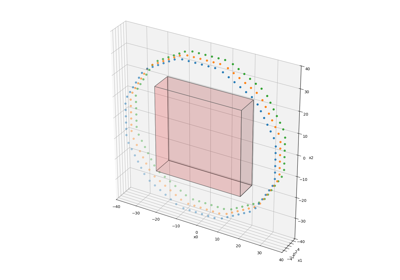
Examples
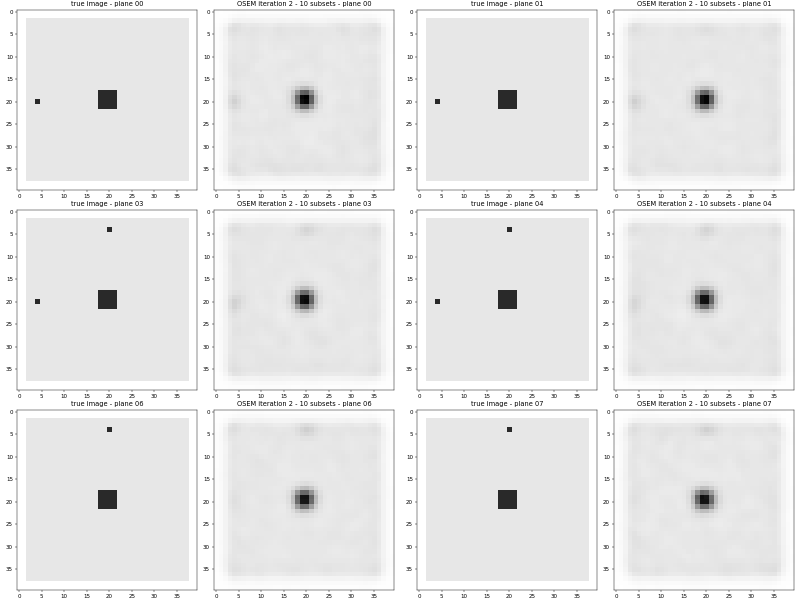
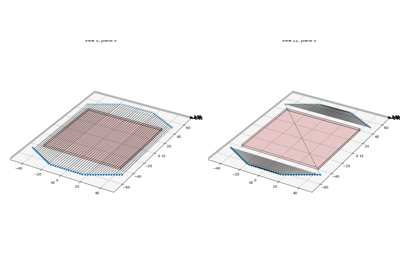
PDHG and LM-SPHG to optimize the Poisson logL and total variation
PDHG and LM-SPHG to optimize the Poisson logL and total variation- Parameters:
xp (ModuleType) – array module to use for storing the LOR endpoints
dev (str) – device to use for storing the LOR endpoints
radius (float) – radius of the scanner
num_sides (int) – number of sides (faces) of each regular polygon
num_lor_endpoints_per_side (int) – number of LOR endpoints in each side (face) of each polygon
lor_spacing (float) – spacing between the LOR endpoints in each side
ring_positions (Array) – 1D array with the coordinate of the rings along the ring axis
symmetry_axis (int) – the ring axis (0,1,2)
phis (None | Array, optional) – angle of each side, by default None means that the sides are equally spaced around a circle
- property all_lor_endpoints: Array
the world coordinates of all LOR endpoints
- property all_lor_endpoints_index_in_ring: Array
the index within the ring (regular polygon) of all LOR endpoints
- property all_lor_endpoints_index_offset: Array
the offset in the linear (flattend) index for all LOR endpoints
- property all_lor_endpoints_module_number: Array
the module number of all LOR endpoints
- property all_lor_endpoints_ring_number: Array
the ring (regular polygon) number of all LOR endpoints
- get_lor_endpoints(module: Array, index_in_module: Array) Array
get the coordinates for LOR endpoints defined by module and index in module
- Parameters:
module (Array) – the module number of the LOR endpoints
index_in_module (Array) – the index in module number of the LOR endpoints
- Returns:
the 3 world coordinates of the LOR endpoints
- Return type:
Array
- linear_lor_endpoint_index(module: Array, index_in_module: Array) Array
transform the module + index_in_modules indices into a flattened / linear LOR endpoint index
- Parameters:
module (Array) – containing module numbers
index_in_module (Array) – containing index in modules
- Returns:
the flattened LOR endpoint index
- Return type:
Array
- property lor_spacing: float
the spacing between the LOR endpoints in every side (face) of each polygon
- property modules: tuple[PETScannerModule]
tuple of modules defining the scanner
- property num_lor_endpoints_per_module: Array
numpy array showing how many LOR endpoints are in every module
- property ring_positions: Array
the ring (regular polygon) positions
- setup_all_lor_endpoints() None
calculate the position of all lor endpoints by iterating over the modules and calculating the transformed coordinates of all module endpoints
- Return type:
None
- show_lor_endpoints(ax: Axes, show_linear_index: bool = True, **kwargs) None
show all LOR endpoints in a 3D plot
- Parameters:
ax (plt.Axes) – a 3D matplotlib axes
show_linear_index (bool, optional) – annotate the LOR endpoints with the linear LOR endpoint index
**kwargs (keyword arguments) – passed to show_lor_endpoints() of the scanner module
- Return type:
None
- property xp: ModuleType
array module to use for storing the LOR endpoints
- class parallelproj.pet_scanners.RegularPolygonPETScannerModule(xp: ModuleType, dev: str, radius: float, num_sides: int, num_lor_endpoints_per_side: int, lor_spacing: float, ax0: int = 2, ax1: int = 1, affine_transformation_matrix: Array | None = None, phis: None | Array = None)[source]
Bases:
PETScannerModuleRegular polygon PET scanner module (detectors on a regular polygon)
- Parameters:
xp (ModuleType) – array module to use for storing the LOR endpoints
device (str) – device to use for storing the LOR endpoints
radius (float) – inner radius of the regular polygon
num_sides (int) – number of sides of the regular polygon
num_lor_endpoints_per_sides (int) – number of LOR endpoints per side
lor_spacing (float) – spacing between the LOR endpoints in the polygon direction
ax0 (int, optional) – axis number for the first direction, by default 2
ax1 (int, optional) – axis number for the second direction, by default 1
affine_transformation_matrix (Array | None, optional) – 4x4 affine transformation matrix applied to the LOR endpoint coordinates, default None if None, the 4x4 identity matrix is used
phis (None | Array, optional) – angle of each side, by default None means that the sides are equally spaced around a circle
dev (str)
num_lor_endpoints_per_side (int)
- property affine_transformation_matrix: Array
4x4 affine transformation matrix
- Return type:
Array
- get_lor_endpoints(inds: Array | None = None) Array
mapping from LOR endpoint indices within module to an array of “transformed” world coordinates
- Parameters:
inds (Array | None, optional) – an non-negative integer array of indices, default None if None means all possible indices [0, … , num_lor_endpoints - 1]
- Returns:
a 3 x len(inds) float array with the world coordinates of the LOR endpoints including an affine transformation
- Return type:
Array
- get_raw_lor_endpoints(inds: Array | None = None) Array[source]
mapping from LOR endpoint indices within module to an array of “raw” world coordinates
- Parameters:
inds (Array | None, optional) – an non-negative integer array of indices, default None if None means all possible indices [0, … , num_lor_endpoints - 1]
- Returns:
a 3 x len(inds) float array with the world coordinates of the LOR endpoints
- Return type:
Array
- property lor_endpoint_numbers: Array
array enumerating all the LOR endpoints in the module
- Return type:
Array
- property lor_spacing: float
spacing between the LOR endpoints in a module along the polygon
- Return type:
- property phis: Array
azimuthal angle of each side
- Return type:
Array
- show_lor_endpoints(ax: Axes, annotation_fontsize: float = 0, annotation_prefix: str = '', annotation_offset: int = 0, transformed: bool = True, **kwargs) None
show the LOR coordinates in a 3D scatter plot
- Parameters:
ax (plt.Axes) – 3D matplotlib axes
annotation_fontsize (float, optional) – fontsize of LOR endpoint number annotation, by default 0
annotation_prefix (str, optional) – prefix for annotation, by default ‘’
annotation_offset (int, optional) – number to add to crystal number, by default 0
transformed (bool, optional) – use transformed instead of raw coordinates, by default True
- Return type:
None
- property xp: ModuleType
array module to use for storing the LOR endpoints
PET LOR / sinogram descriptors parallelproj.pet_lors
description of PET LORs (and sinograms bins) consisting of two detector endpoints
- class parallelproj.pet_lors.EqualBlockPETLORDescriptor(scanner: ModularizedPETScannerGeometry, all_block_pairs: Array)[source]
Bases:
PETLORDescriptorLOR descriptor for scanner consisting of block modules where each block module has the same number of LOR endpoints
- Parameters:
scanner (ModularizedPETScannerGeometry) – A modularized PET scanner consisting of block modules with the same number of LOR endpoints.
all_block_pairs (Array) – An array containing pairs of integer numbers encoding which block pairs are in coincidence and form valid LORs.
- Return type:
None
- property all_block_pairs: Array
all block pairs in coincidence
- get_lor_coordinates(block_pair_nums: None | Array = None) tuple[Array, Array][source]
Get the coordinates of LORs for the given block pair numbers.
- Parameters:
block_pair_nums (None or Array, optional) – The block pair numbers for which to retrieve the LOR coordinates. If None, all block pair numbers will be used.
- Returns:
tuple[Array, Array]
A tuple containing two arrays –
the start coordinates of the LORs, with shape (N, 3), where N is the total number of LORs.
the end coordinates of the LORs, with shape (N, 3)
- Return type:
tuple[Array, Array]
- property scanner: ModularizedPETScannerGeometry
the scanner for which coincidences are described
- show_block_pair_lors(ax: Axes, block_pair_nums: Array, lw: float = 0.2, **kwargs) None[source]
show all LORs connecting all endpoints between blocks forming a block pairs
- property xp: ModuleType
array module to use for storing the LOR endpoints
- class parallelproj.pet_lors.PETLORDescriptor(scanner: ModularizedPETScannerGeometry)[source]
Bases:
ABCabstract base class to describe which modules / indices in modules of a modularized PET scanner are in coincidence; defining geometrical LORs
- Parameters:
scanner (ModularizedPETScannerGeometry) – a modularized PET scanner
- abstract get_lor_coordinates() tuple[Array, Array][source]
return the start and end coordinates of all (or a subset of) LORs
- Return type:
tuple[Array, Array]
- property scanner: ModularizedPETScannerGeometry
the scanner for which coincidences are described
- property xp: ModuleType
array module to use for storing the LOR endpoints
- class parallelproj.pet_lors.RegularPolygonPETLORDescriptor(scanner: RegularPolygonPETScannerGeometry, radial_trim: int = 3, max_ring_difference: int | None = None, sinogram_order: SinogramSpatialAxisOrder = SinogramSpatialAxisOrder.RVP)[source]
Bases:
PETLORDescriptorLOR descriptor for a regular polygon PET scanner where we have coincidences within and between “rings (polygons of modules)” The geometrical LORs can be sorted into a sinogram having a “plane”, “view” and “radial” axis.
Examples
PDHG and LM-SPHG to optimize the Poisson logL and total variation
PDHG and LM-SPHG to optimize the Poisson logL and total variation- Parameters:
scanner (RegularPolygonPETScannerGeometry) – a regular polygon PET scanner
radial_trim (int, optional) – number of geometrial LORs to disregard in the radial direction, by default 3
max_ring_difference (int | None, optional) – maximim ring difference to consider for coincidences, by default None means all ring differences are included
sinogram_order (SinogramSpatialAxisOrder, optional) – the order of the sinogram axes, by default SinogramSpatialAxisOrder.RVP
- property end_in_ring_index: Array
end index within ring for all views - shape (num_view, num_rad)
- property end_plane_index: Array
end plane for all planes
- get_distributed_views_and_slices(num_subsets: int, num_dim: int) tuple[list[Array], list[tuple[slice, ...]]][source]
distribute sinogram views numbers into subsets
- get_lor_coordinates(views: None | Array = None) tuple[Array, Array][source]
return the start and end coordinates of all LORs / or a subset of views
- Parameters:
views (None | Array, optional) – the views to consider, by default None means all views
- Returns:
xstart, xend – 2 dimensional floating point arrays containing the start and end coordinates of all LORs
- Return type:
Array
- property scanner: ModularizedPETScannerGeometry
the scanner for which coincidences are described
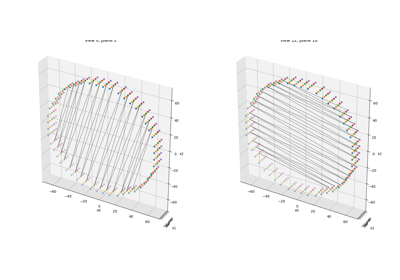
- show_views(ax: Axes, views: Array, planes: Array, lw: float = 0.2, **kwargs) None[source]
show all LORs of a single view in a given plane
- property sinogram_order: SinogramSpatialAxisOrder
the order of the sinogram axes
- property start_in_ring_index: Array
start index within ring for all views - shape (num_view, num_rad)
- property start_plane_index: Array
start plane for all planes
- property xp: ModuleType
array module to use for storing the LOR endpoints
- class parallelproj.pet_lors.SinogramSpatialAxisOrder(value, names=<not given>, *values, module=None, qualname=None, type=None, start=1, boundary=None)[source]
Bases:
Enumorder of spatial axis in a sinogram R (radial), V (view), P (plane)
Examples
- PRV = 5
[plane,radial,view]
- PVR = 6
[plane,view,radial]
- RPV = 2
[radial,plane,view]
- RVP = 1
[radial,view,plane]
- VPR = 4
[view,plane,radial]
- VRP = 3
[view,radial,plane]
PET TOF parameters parallelproj.tof
PET time-of-flight (TOF) related classes and functions
- class parallelproj.tof.TOFParameters(num_tofbins: int = 29, tofbin_width: float = 25.37139696, sigma_tof: float = 24.50529087048832, num_sigmas: float = 3.0, tofcenter_offset: float = 0)[source]
Bases:
objectgeneric time of flight (TOF) parameters for a scanner with 385ps FWHM TOF
- num_tofbins: int
number of time of flight bins
- tofbin_width: float
width of the TOF bin in spatial units (mm)
- sigma_tof: float
standard deviation of Gaussian TOF kernel in spatial units (mm)
- num_sigmas: float
number of sigmas after which TOF kernel is truncated
- tofcenter_offset: float
offset of center of central TOF bin from LOR center in spatial units (mm)
- Parameters:
PET projectors parallelproj.projectors
high-level geometrical forward and back projectors
- class parallelproj.projectors.EqualBlockPETProjector(lor_descriptor: EqualBlockPETLORDescriptor, img_shape: tuple[int, int, int], voxel_size: tuple[float, float, float], img_origin: None | Array = None)[source]
Bases:
LinearOperatorgeometric non-TOF and TOF sinogram projector for regular polygon PET scanners
Examples
PDHG and LM-SPHG to optimize the Poisson logL and total variation
PDHG and LM-SPHG to optimize the Poisson logL and total variation- Parameters:
lor_descriptor (RegularPolygonPETLORDescriptor) – descriptor of the LOR start / end points
img_shape (tuple[int, int, int]) – shape of the image to be projected
voxel_size (tuple[float, float, float]) – the voxel size of the image to be projected
img_origin (None | Array, optional) – the origin of the image to be projected, by default None means that the center of the image is at world coordinate (0,0,0)
- __call__(x: Array) Array
alias to apply(x)
- Parameters:
x (Array)
- Return type:
Array
- adjoint(y: Array) Array
(scaled) adjoint step \(x = \overline{\alpha} A^H y\)
- Parameters:
y (Array)
- Return type:
Array
- adjointness_test(xp: ModuleType, dev: str, verbose: bool = False, iscomplex: bool = False, **kwargs) bool
test whether the adjoint is correctly implemented
- apply(x: Array) Array
(scaled) forward step \(y = \alpha A x\)
- Parameters:
x (Array)
- Return type:
Array
- property img_origin: Array
image origin - world coordinates of the [0,0,0] voxel
- property lor_descriptor: EqualBlockPETLORDescriptor
LOR descriptor
- norm(xp: ModuleType, dev: str, num_iter: int = 30, iscomplex: bool = False, verbose: bool = False) float
estimate norm of the linear operator using power iterations
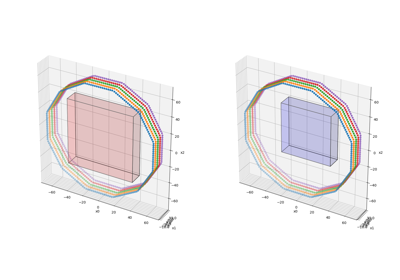
- show_geometry(ax: Axes, color: tuple[float, float, float] = (1.0, 0.0, 0.0), edgecolor: str = 'grey', alpha: float = 0.1) None[source]
show the geometry of the scanner and the FOV of the image
- Parameters:
ax (plt.Axes) – matplotlib axes object with projection = ‘3d’
color (tuple[float, float, float], optional) – color to use for the FOV cube, by default (1.,0.,0.)
edgecolor (str, optional) – edgecolor to use for the FOV cube, by default ‘grey’
alpha (float, optional) – alpha value of the FOV cube, by default 0.1
- Return type:
None
- property tof_parameters: TOFParameters | None
TOF parameters
- property voxel_size: Array
voxel size
- property xp: ModuleType
array module
- class parallelproj.projectors.ListmodePETProjector(event_start_coordinates: Array, event_end_coordinates: Array, img_shape: tuple[int, int, int], voxel_size: tuple[float, float, float], img_origin: None | Array = None)[source]
Bases:
LinearOperatornon-TOF and TOF listmode projector for regular polygon PET scanners
Examples
PDHG and LM-SPHG to optimize the Poisson logL and total variation
PDHG and LM-SPHG to optimize the Poisson logL and total variation- Parameters:
event_start_coordinates (Array) – float world coordinates of event LOR start points, shape (num_events, 3)
event_end_coordinates (Array) – float world coordinates of event LOR end points, shape (num_events, 3)
img_shape (tuple[int, int, int]) – shape of the image to be projected
voxel_size (tuple[float, float, float]) – the voxel size of the image to be projected
img_origin (None | Array, optional) – the origin of the image to be projected, by default None means that the center of the image is at world coordinate (0,0,0)
- __call__(x: Array) Array
alias to apply(x)
- Parameters:
x (Array)
- Return type:
Array
- adjoint(y: Array) Array
(scaled) adjoint step \(x = \overline{\alpha} A^H y\)
- Parameters:
y (Array)
- Return type:
Array
- adjointness_test(xp: ModuleType, dev: str, verbose: bool = False, iscomplex: bool = False, **kwargs) bool
test whether the adjoint is correctly implemented
- apply(x: Array) Array
(scaled) forward step \(y = \alpha A x\)
- Parameters:
x (Array)
- Return type:
Array
- property event_end_coordinates: Array
coordinates of LOR end points
- property event_start_coordinates: Array
coordinates of LOR start points
- norm(xp: ModuleType, dev: str, num_iter: int = 30, iscomplex: bool = False, verbose: bool = False) float
estimate norm of the linear operator using power iterations
- property tof_parameters: TOFParameters | None
TOF parameters
- property voxel_size: Array
voxel size
- property xp: ModuleType
array module
- class parallelproj.projectors.ParallelViewProjector2D(image_shape: tuple[int, int], radial_positions: Array, view_angles: Array, radius: float, image_origin: tuple[float, float], voxel_size: tuple[float, float])[source]
Bases:
LinearOperator2D non-TOF parallel view projector
init method
- Parameters:
image_shape (tuple[int, int]) – shape of the input image (n1, n2)
radial_positions (Array) – radial positions of the projection views in world coordinates
view_angles (Array) – angles of the projection views in radians
radius (float) – radius of the scanner
image_origin (tuple[float, float]) – world coordinates of the [0,0] voxel
voxel_size (tuple[float, float]) – the voxel size in both directions
- __call__(x: Array) Array
alias to apply(x)
- Parameters:
x (Array)
- Return type:
Array
- adjoint(y: Array) Array
(scaled) adjoint step \(x = \overline{\alpha} A^H y\)
- Parameters:
y (Array)
- Return type:
Array
- adjointness_test(xp: ModuleType, dev: str, verbose: bool = False, iscomplex: bool = False, **kwargs) bool
test whether the adjoint is correctly implemented
- apply(x: Array) Array
(scaled) forward step \(y = \alpha A x\)
- Parameters:
x (Array)
- Return type:
Array
- property image_origin: Array
image origin - world coordinates of the [0,0] voxel
- norm(xp: ModuleType, dev: str, num_iter: int = 30, iscomplex: bool = False, verbose: bool = False) float
estimate norm of the linear operator using power iterations
- show_views(views_to_show: None | Array = None, image: None | Array = None, **kwargs) Figure[source]
visualize the geometry of certrain projection views
- Parameters:
views_to_show (None | Array) – view numbers to show
image (None | Array) – show an image inside the projector geometry
**kwargs (some type) – passed to matplotlib.pyplot.imshow
- Return type:
Figure
- property voxel_size: Array
voxel size
- property xend: Array
coordinates of LOR end points
- property xp: ModuleType
array module
- property xstart: Array
coordinates of LOR start points
- class parallelproj.projectors.ParallelViewProjector3D(image_shape: tuple[int, int, int], radial_positions: Array, view_angles: Array, radius: float, image_origin: tuple[float, float, float], voxel_size: tuple[float, float], ring_positions: Array, span: int = 1, max_ring_diff: int | None = None)[source]
Bases:
LinearOperator3D non-TOF parallel view projector
init method
- Parameters:
image_shape (tuple[int, int, int]) – shape of the input image (n0, n1, n2) (last direction is axial)
radial_positions (Array) – radial positions of the projection views in world coordinates
view_angles (Array) – angles of the projection views in radians
radius (float) – radius of the scanner
image_origin (tuple[float, float, float]) – world coordinates of the [0,0,0] voxel
voxel_size (tuple[float, float, float]) – the voxel size in all directions (last direction is axial)
ring_positions (Array) – position of the rings in world coordinates
span (int) – span of the sinogram - default is 1
max_ring_diff (int | None) – maximum ring difference - default is None (no limit)
- __call__(x: Array) Array
alias to apply(x)
- Parameters:
x (Array)
- Return type:
Array
- adjoint(y: Array) Array
(scaled) adjoint step \(x = \overline{\alpha} A^H y\)
- Parameters:
y (Array)
- Return type:
Array
- adjointness_test(xp: ModuleType, dev: str, verbose: bool = False, iscomplex: bool = False, **kwargs) bool
test whether the adjoint is correctly implemented
- apply(x: Array) Array
(scaled) forward step \(y = \alpha A x\)
- Parameters:
x (Array)
- Return type:
Array
- property image_origin: Array
image origin - world coordinates of the [0,0,0] voxel
- norm(xp: ModuleType, dev: str, num_iter: int = 30, iscomplex: bool = False, verbose: bool = False) float
estimate norm of the linear operator using power iterations
- property voxel_size: Array
the voxel size in all directions
- property xend: Array
coordinates of LOR end points
- property xp: ModuleType
array module
- property xstart: Array
coordinates of LOR start points
- class parallelproj.projectors.RegularPolygonPETProjector(lor_descriptor: RegularPolygonPETLORDescriptor, img_shape: tuple[int, int, int], voxel_size: tuple[float, float, float], img_origin: None | Array = None, views: None | Array = None, cache_lor_endpoints: bool = True)[source]
Bases:
LinearOperatorgeometric non-TOF and TOF sinogram projector for regular polygon PET scanners
Examples
PDHG and LM-SPHG to optimize the Poisson logL and total variation
PDHG and LM-SPHG to optimize the Poisson logL and total variation- Parameters:
lor_descriptor (RegularPolygonPETLORDescriptor) – descriptor of the LOR start / end points
img_shape (tuple[int, int, int]) – shape of the image to be projected
voxel_size (tuple[float, float, float]) – the voxel size of the image to be projected
img_origin (None | Array, optional) – the origin of the image to be projected, by default None means that the center of the image is at world coordinate (0,0,0)
views (None | Array, optional) – sinogram views to be projected, by default None means that all views are being projected
cache_lor_endpoints (bool, optional) – whether to cache the LOR endpoints, by default True setting it to False will save memory but will slow down computations
- __call__(x: Array) Array
alias to apply(x)
- Parameters:
x (Array)
- Return type:
Array
- adjoint(y: Array) Array
(scaled) adjoint step \(x = \overline{\alpha} A^H y\)
- Parameters:
y (Array)
- Return type:
Array
- adjointness_test(xp: ModuleType, dev: str, verbose: bool = False, iscomplex: bool = False, **kwargs) bool
test whether the adjoint is correctly implemented
- apply(x: Array) Array
(scaled) forward step \(y = \alpha A x\)
- Parameters:
x (Array)
- Return type:
Array
- convert_sinogram_to_listmode(sinogram: Array) tuple[Array, Array, Array | None][source]
convert a non-TOF or TOF emission sinogram to listmode events
- Parameters:
sinogram (Array) – an integer (TOF or non-TOF) emission sinogram
- Returns:
event_start_coordinates, event_end_coordinates, event_tofbin in case of non-TOF, event_tofbin is None
- Return type:
tuple[Array, Array, Array | None]
- property img_origin: Array
image origin - world coordinates of the [0,0,0] voxel
- property lor_descriptor: RegularPolygonPETLORDescriptor
LOR descriptor
- norm(xp: ModuleType, dev: str, num_iter: int = 30, iscomplex: bool = False, verbose: bool = False) float
estimate norm of the linear operator using power iterations
- show_geometry(ax: Axes, color: tuple[float, float, float] = (1.0, 0.0, 0.0), edgecolor: str = 'grey', alpha: float = 0.1) None[source]
show the geometry of the scanner and the FOV of the image
- Parameters:
ax (plt.Axes) – matplotlib axes object with projection = ‘3d’
color (tuple[float, float, float], optional) – color to use for the FOV cube, by default (1.,0.,0.)
edgecolor (str, optional) – edgecolor to use for the FOV cube, by default ‘grey’
alpha (float, optional) – alpha value of the FOV cube, by default 0.1
- Return type:
None
- property tof_parameters: TOFParameters | None
TOF parameters
- property views: Array
view numbers to be projected
- property voxel_size: Array
voxel size
- property xp: ModuleType
array module
Linear operators parallelproj.operators
basic linear operators
- class parallelproj.operators.CompositeLinearOperator(operators: Sequence[LinearOperator])[source]
Bases:
LinearOperatorComposite Linear Operator defined by a sequence of Linear Operators
Given a Sequence of operators
\[A^0, A^1, \ldots, A^{n-1}\]the composite linear operator is defined as
\[A(x) = A^0( A^1( ... ( A^{n-1}(x) ) ) )\]Examples
PDHG and LM-SPHG to optimize the Poisson logL and total variation
PDHG and LM-SPHG to optimize the Poisson logL and total variationinit method
- Parameters:
operators (Sequence[LinearOperator, ...]) – Sequence of linear operators
- __call__(x: Array) Array
alias to apply(x)
- Parameters:
x (Array)
- Return type:
Array
- __getitem__(i: int) LinearOperator[source]
get the i-th operator \(A_i\)
- Parameters:
i (int)
- Return type:
- adjoint(y: Array) Array
(scaled) adjoint step \(x = \overline{\alpha} A^H y\)
- Parameters:
y (Array)
- Return type:
Array
- adjointness_test(xp: ModuleType, dev: str, verbose: bool = False, iscomplex: bool = False, **kwargs) bool
test whether the adjoint is correctly implemented
- apply(x: Array) Array
(scaled) forward step \(y = \alpha A x\)
- Parameters:
x (Array)
- Return type:
Array
- norm(xp: ModuleType, dev: str, num_iter: int = 30, iscomplex: bool = False, verbose: bool = False) float
estimate norm of the linear operator using power iterations
- property operators: Sequence[LinearOperator]
tuple of linear operators
- class parallelproj.operators.ElementwiseMultiplicationOperator(values: Array)[source]
Bases:
LinearOperatorElement-wise multiplication operator (multiplication with a diagonal matrix)
Examples
PDHG and LM-SPHG to optimize the Poisson logL and total variation
PDHG and LM-SPHG to optimize the Poisson logL and total variationinit method
- Parameters:
values (Array) – values of the diagonal matrix
- __call__(x: Array) Array
alias to apply(x)
- Parameters:
x (Array)
- Return type:
Array
- adjoint(y: Array) Array
(scaled) adjoint step \(x = \overline{\alpha} A^H y\)
- Parameters:
y (Array)
- Return type:
Array
- adjointness_test(xp: ModuleType, dev: str, verbose: bool = False, iscomplex: bool = False, **kwargs) bool
test whether the adjoint is correctly implemented
- apply(x: Array) Array
(scaled) forward step \(y = \alpha A x\)
- Parameters:
x (Array)
- Return type:
Array
- norm(xp: ModuleType, dev: str, num_iter: int = 30, iscomplex: bool = False, verbose: bool = False) float
estimate norm of the linear operator using power iterations
- property values: Array
values that get multiplied
- property xp: ModuleType
array module of the operator
- class parallelproj.operators.FiniteForwardDifference(in_shape: tuple[int, ...])[source]
Bases:
LinearOperatorfinite difference gradient operator
- __call__(x: Array) Array
alias to apply(x)
- Parameters:
x (Array)
- Return type:
Array
- adjoint(y: Array) Array
(scaled) adjoint step \(x = \overline{\alpha} A^H y\)
- Parameters:
y (Array)
- Return type:
Array
- adjointness_test(xp: ModuleType, dev: str, verbose: bool = False, iscomplex: bool = False, **kwargs) bool
test whether the adjoint is correctly implemented
- apply(x: Array) Array
(scaled) forward step \(y = \alpha A x\)
- Parameters:
x (Array)
- Return type:
Array
- class parallelproj.operators.GaussianFilterOperator(in_shape: tuple[int, ...], sigma: float | Array, **kwargs)[source]
Bases:
LinearOperatorGaussian filter operator
Examples
PDHG and LM-SPHG to optimize the Poisson logL and total variation
PDHG and LM-SPHG to optimize the Poisson logL and total variationinit method
- Parameters:
- __call__(x: Array) Array
alias to apply(x)
- Parameters:
x (Array)
- Return type:
Array
- adjoint(y: Array) Array
(scaled) adjoint step \(x = \overline{\alpha} A^H y\)
- Parameters:
y (Array)
- Return type:
Array
- adjointness_test(xp: ModuleType, dev: str, verbose: bool = False, iscomplex: bool = False, **kwargs) bool
test whether the adjoint is correctly implemented
- apply(x: Array) Array
(scaled) forward step \(y = \alpha A x\)
- Parameters:
x (Array)
- Return type:
Array
- class parallelproj.operators.LinearOperator[source]
Bases:
ABCabstract base class for linear operators
- adjoint(y: Array) Array[source]
(scaled) adjoint step \(x = \overline{\alpha} A^H y\)
- Parameters:
y (Array)
- Return type:
Array
- adjointness_test(xp: ModuleType, dev: str, verbose: bool = False, iscomplex: bool = False, **kwargs) bool[source]
test whether the adjoint is correctly implemented
- apply(x: Array) Array[source]
(scaled) forward step \(y = \alpha A x\)
- Parameters:
x (Array)
- Return type:
Array
- class parallelproj.operators.LinearOperatorSequence(operators: Sequence[LinearOperator])[source]
Bases:
Sequence[LinearOperator]Sequence of linear operators
\[A^0, A^1 \ldots, A^{n-1}\]that can be evaluated independently.
Examples
PDHG and LM-SPHG to optimize the Poisson logL and total variation
PDHG and LM-SPHG to optimize the Poisson logL and total variationinit method
- Parameters:
operators (Sequence[LinearOperator, ...]) – Sequence of linear operators
- __call__(x: Array) list[Array][source]
Call self as a function.
- Parameters:
x (Array)
- Return type:
list[Array]
- __getitem__(i: int) LinearOperator[source]
get the i-th linear operator \(A^i\)
- Parameters:
i (int)
- Return type:
- adjoint(y: list[Array]) Array[source]
\(\sum_i (A^i)^H y^i\) for all \(i\)
- Parameters:
y (list[Array])
- Return type:
Array
- apply(x: Array) list[Array][source]
\((A^0(x), A^1(x), \ldots, A^{n-1}(x))\)
- Parameters:
x (Array)
- Return type:
list[Array]
- count(value) integer -- return number of occurrences of value
Warning
method ‘parallelproj.operators.LinearOperatorSequence.count’ undocumented
- index(value[, start[, stop]]) integer -- return first index of value.
Raises ValueError if the value is not present.
Supporting start and stop arguments is optional, but recommended.
- norms(xp: ModuleType, dev: str) list[float][source]
\(\text{norm}(A^i)\) for all \(i\)
- Parameters:
xp (ModuleType)
dev (str)
- Return type:
- property operators: Sequence[LinearOperator]
all subset operators
- class parallelproj.operators.MatrixOperator(A: Array)[source]
Bases:
LinearOperatorLinear Operator defined by dense matrix multiplication
Examples
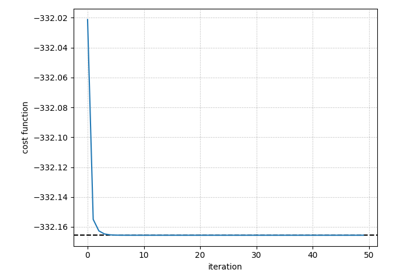
DePierro’s algorithm to optimize the Poisson logL with quadratic intensity prior
DePierro's algorithm to optimize the Poisson logL with quadratic intensity priorinit method
- Parameters:
A (Array) – 2D real or complex array representing the matrix
- property A: Array
matrix of the operator
- __call__(x: Array) Array
alias to apply(x)
- Parameters:
x (Array)
- Return type:
Array
- adjoint(y: Array) Array
(scaled) adjoint step \(x = \overline{\alpha} A^H y\)
- Parameters:
y (Array)
- Return type:
Array
- adjointness_test(xp: ModuleType, dev: str, verbose: bool = False, iscomplex: bool = False, **kwargs) bool
test whether the adjoint is correctly implemented
- apply(x: Array) Array
(scaled) forward step \(y = \alpha A x\)
- Parameters:
x (Array)
- Return type:
Array
- norm(xp: ModuleType, dev: str, num_iter: int = 30, iscomplex: bool = False, verbose: bool = False) float
estimate norm of the linear operator using power iterations
- property xp: ModuleType
array module of the operator
- class parallelproj.operators.TOFNonTOFElementwiseMultiplicationOperator(in_shape: tuple[int, ...], values: Array)[source]
Bases:
LinearOperatorElement-wise multiplication operator between a non-TOF and TOF sinogram
Examples
PDHG and LM-SPHG to optimize the Poisson logL and total variation
PDHG and LM-SPHG to optimize the Poisson logL and total variationinit method
- Parameters:
- __call__(x: Array) Array
alias to apply(x)
- Parameters:
x (Array)
- Return type:
Array
- adjoint(y: Array) Array
(scaled) adjoint step \(x = \overline{\alpha} A^H y\)
- Parameters:
y (Array)
- Return type:
Array
- adjointness_test(xp: ModuleType, dev: str, verbose: bool = False, iscomplex: bool = False, **kwargs) bool
test whether the adjoint is correctly implemented
- apply(x: Array) Array
(scaled) forward step \(y = \alpha A x\)
- Parameters:
x (Array)
- Return type:
Array
- norm(xp: ModuleType, dev: str, num_iter: int = 30, iscomplex: bool = False, verbose: bool = False) float
estimate norm of the linear operator using power iterations
- property values: Array
values that get multiplied
- property xp: ModuleType
array module of the operator
- class parallelproj.operators.VstackOperator(operators: tuple[LinearOperator, ...])[source]
Bases:
LinearOperatorStacking operator for stacking multiple linear operators vertically
init method
- Parameters:
operators (tuple[LinearOperator, ...]) – tuple of linear operators
- __call__(x: Array) Array
alias to apply(x)
- Parameters:
x (Array)
- Return type:
Array
- adjoint(y: Array) Array
(scaled) adjoint step \(x = \overline{\alpha} A^H y\)
- Parameters:
y (Array)
- Return type:
Array
- adjointness_test(xp: ModuleType, dev: str, verbose: bool = False, iscomplex: bool = False, **kwargs) bool
test whether the adjoint is correctly implemented
- apply(x: Array) Array
(scaled) forward step \(y = \alpha A x\)
- Parameters:
x (Array)
- Return type:
Array